|
| Brand Name: | SUNHOUSE |
| Model Number: | GP01 |
| MOQ: | 800 |
| Price: | Inquiry |
| Payment Terms: | L/C,T/T |
Interior Ceiling & Drywall Board Solution
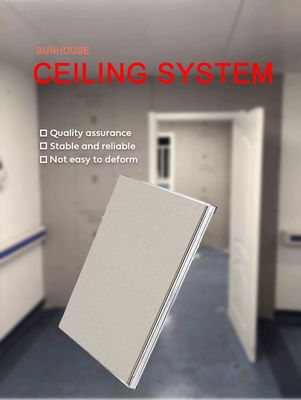
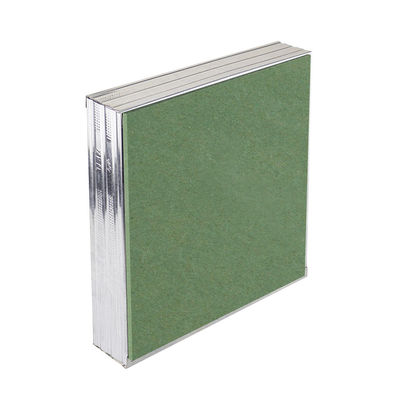
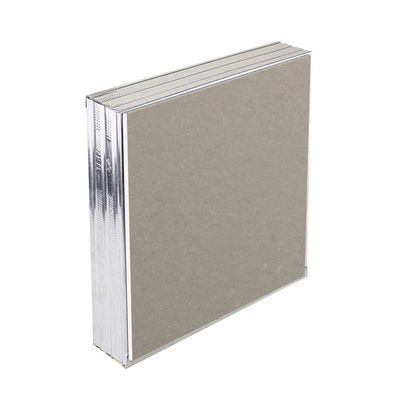
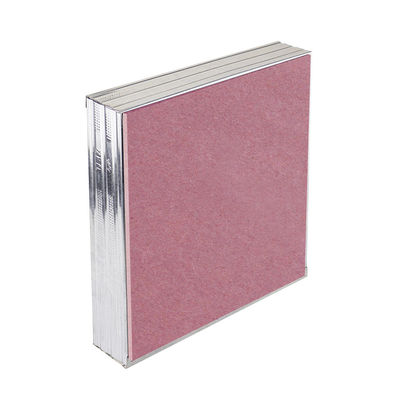
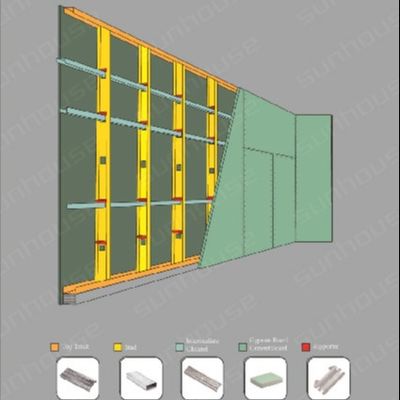
Paper Gypsum Board is a paper-faced plasterboard used in suspended ceilings, drywall partitions, wall lining and interior finishing systems. It is designed for projects where contractors need a flat decorative surface, controlled board weight, practical installation speed and stable performance in everyday interior environments.
In interior construction, gypsum board is often selected not simply because it is lightweight, but because it helps contractors build ceiling and partition systems with predictable finishing quality. A paper-faced gypsum board can be cut on site, fixed to light steel framing, jointed, skimmed and painted with standard drywall tools. This makes it suitable for commercial buildings, residential apartments, hotels, schools, retail spaces and renovation projects where construction time and surface consistency are important.
This product is intended for indoor use. The final performance of a ceiling or partition system depends on the full assembly, including board thickness, frame spacing, screw distance, joint treatment, cavity insulation and finishing method.
7.5 kg/m²
Test value for 9.5mm board
700 N
Parallel test value for 12mm board
4.2%
Test value for 12mm water-resistant board
>20 min
Test value for fire-resistant board
Recommended for dry indoor ceilings, partitions and wall lining. It is commonly used in offices, apartments, classrooms, retail interiors and general commercial spaces.
Used in areas where the project design requires improved fire performance, such as corridors, stair access zones, service rooms and public building interiors.
Suitable for controlled humid indoor areas. It can be used in kitchens, utility rooms and selected commercial spaces, but it should not be treated as a waterproof board for direct water exposure.
The following values are based on the supplied product test data. Project buyers should confirm final specifications according to the required board type, thickness and local building requirements.
| Test Item | Thickness / Type | Standard Value | Test Value |
|---|---|---|---|
| Density | 9.5mm | ≤ 9.5 kg/m² | 7.5 kg/m² |
| Density | 12mm | ≤ 12.0 kg/m² | Regular: 9.5 kg/m²; Fire Resistant: 9.5 kg/m²; Water Resistant: 11.5 kg/m² |
| Flexural Strength - Parallel | 9.5mm | ≥ 360 N | 560 N |
| Flexural Strength - Parallel | 12mm | ≥ 500 N | 700 N |
| Flexural Strength - Cross | 9.5mm | ≥ 140 N | 180 N |
| Flexural Strength - Cross | 12mm | ≥ 160 N | 240 N |
| Surface Paper Bonding | All listed types | Core material not exposed | Unexposed |
| Fire Stability | Fire Resistant Board | ≥ 20 min | > 20 min |
| Water Absorption | 9.5mm Water Resistant Board | Project-dependent | 6.8% |
| Water Absorption | 12mm Water Resistant Board | Project-dependent | 4.2% |
| Radioactivity | Internal / External | IRa ≤ 1.0; Ir ≤ 1.3 | < 1.0 |
Reference standard: GB/T 9775-2008. The listed values are for product comparison and procurement evaluation. Final project approval should follow local code and system-level testing requirements.
| General ceiling installation | Regular gypsum board, selected according to frame spacing and ceiling design. |
| Corridor or public area | Fire-resistant board may be required where fire-rated assemblies are specified. |
| Kitchen or utility room | Water-resistant board is recommended for controlled humidity conditions. |
| Meeting room or hotel room | Consider double-layer board, separated framing or cavity insulation for better acoustic control. |
The following examples are anonymized application records based on common project use conditions. They are provided to help buyers understand how paper gypsum board is normally specified in interior construction.
A hotel renovation contractor selected paper gypsum board for corridor and guestroom ceilings because the system allowed concealed lighting, air-conditioning outlets and maintenance openings to be integrated more easily than traditional plaster work.
The key requirement was a smooth painted surface after joint treatment, with board weight controlled for suspended ceiling installation.
In a commercial office fit-out, gypsum board partitions were used with light steel framing to divide meeting rooms and work areas. The wall cavity allowed electrical and data cables to be routed without heavy masonry work.
For rooms requiring improved privacy, the contractor reviewed multi-layer board construction and cavity insulation.
In a school interior project, paper gypsum board was applied in classrooms, corridors and administrative areas. The project focused on surface flatness, easy repair, controlled material weight and compatibility with painted finishes.
Fire-resistant board was considered for selected public circulation zones according to the project specification.
It is mainly used for indoor ceilings, drywall partitions, wall lining and decorative interior systems.
Fire-resistant gypsum board can be used in fire-rated assemblies, but the final fire rating must be confirmed by the complete system design and applicable test method.
It can be used in controlled humid areas, but it is not designed for direct or continuous water exposure. Waterproofing treatment is still required where specified.
Common ceiling thicknesses include 9mm, 9.5mm, 12mm and 12.5mm. The final choice depends on frame spacing, installation method and local project requirements.
 english
 français
 Deutsch
 Italiano
 Русский
 Español
 português
 Nederlandse
 ελληνικά
 日本語
日本語
 한국
한국
 العربية
 हिन्दी
 Türkçe
 indonesia
 tiếng Việt
 ไทย
ไทย
 বাংলা
বাংলা
 فارسی
فارسی
 polski