 english
 français
 Deutsch
 Italiano
 Русский
 Español
 português
 Nederlandse
 ελληνικά
 日本語
日本語
 한국
한국
 العربية
 हिन्दी
 Türkçe
 indonesia
 tiếng Việt
 ไทย
ไทย
 বাংলা
বাংলা
 فارسی
فارسی
 polski

STANDARD WALLBOARD / INTERIOR LINING
Regular Gypsum Board
A Good Drywall Finish Starts Before the First Coat of Paint
Regular gypsum board is a paper-faced interior lining panel used on stud partitions and dry wall surfaces. For an importer or project buyer, the useful question is not simply whether the board is white: it is whether its face paper, edge profile, flatness and mechanical properties match the intended fixing and finishing method.
Buyer focus: Before ordering, confirm product type, construction details and document-specific performance. Dimensions and optional classifications shown here require individual quotation and verification.
Why the paper face and core both matter
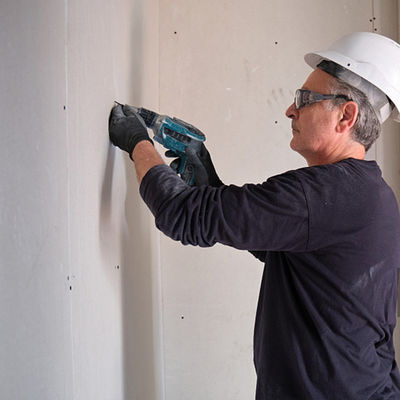
A typical paper-faced gypsum board combines a gypsum-based core with bonded face and back papers. The finish coat adheres to the face, while a correctly selected board and fixing pattern help provide the required substrate. Buyers should inspect torn paper, edge damage, broken corners, face staining and loose paper at cuts. A smooth-looking sheet does not prove flexural strength, nail-pull resistance or dimensional conformity; these require the applicable test results.
Tapered edges versus square edges
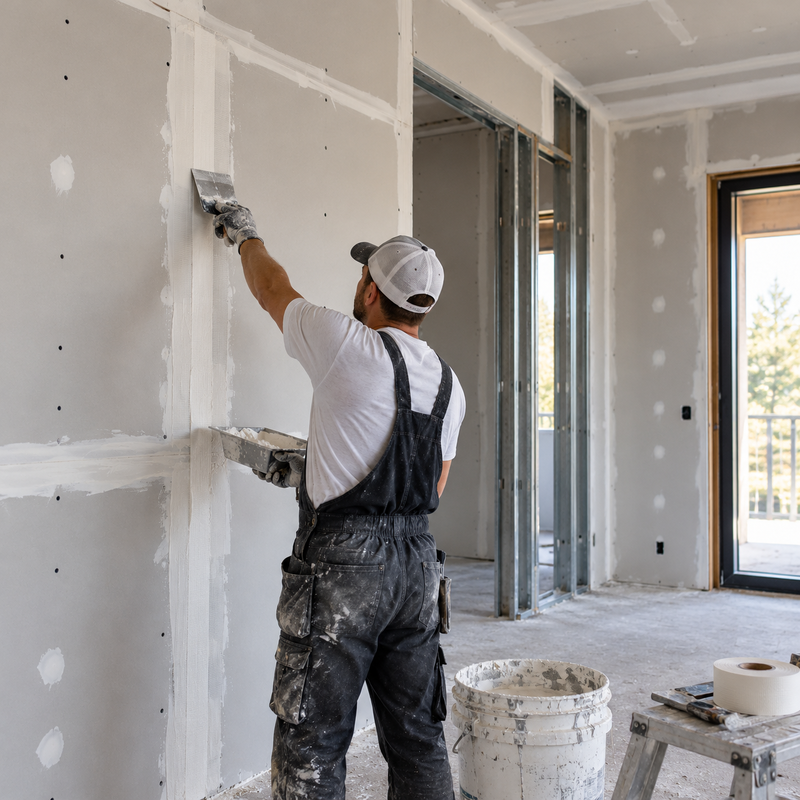
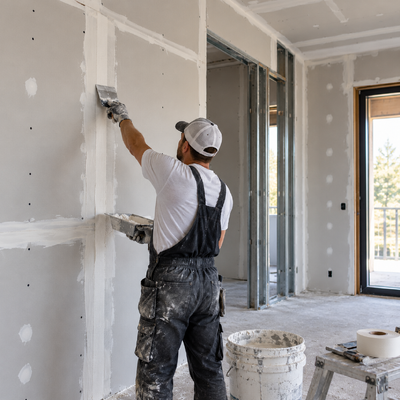
A tapered long edge provides a recess for joint tape and compound. Square-cut short ends do not create the same recess, so butt joints require more careful feathering. Request the edge code, taper profile and corner photographs before approving a large shipment. For walls exposed to strong side lighting, joint location and the chosen finish level are just as important as the board itself.
Thickness selection is a system decision
Buyers often inquire about 9.5 mm, 12.5 mm and 15 mm boards, but these are specification requests rather than interchangeable solutions. Framing centres, wall height, impact exposure, finish weight and local installation rules influence the appropriate thickness. A thin board is not automatically suitable for every partition or ceiling; obtain the project system requirements before fixing the quotation.
What should be checked at receiving inspection
Examine several boards from different pallet positions. Compare nominal and measured dimensions, surface consistency, edge straightness and paper adhesion. Record batch identification and transit damage, rather than approving the full shipment based on a single top sheet. Store boards horizontally on a dry, level support after delivery.
Technical Selection Checklist
Use this checklist to turn a general inquiry into a buildable and comparable purchase specification.
| Item | What to confirm | Buyer action |
|---|---|---|
| Face and edge | Paper-faced surface; tapered or square edge as specified | Request an edge-profile photo and signed sample |
| Dimensions | Length, width, nominal thickness and tolerances | Confirm the exact purchase-order dimension |
| Performance evidence | Relevant ASTM C1396 or EN 520 test records | Check the report against the offered product code |
Frequently Asked Questions
Can standard gypsum board be installed in bathrooms?
Ordinary board should not be specified for persistently damp or water-exposed areas. Check the required moisture-resistant lining and waterproofing system.
Does a smooth board eliminate the need for joint compound?
No. Board joints, screw recesses and corners still need the specified finishing sequence.
Request a Project-Based Quotation
Send your required board type, dimensions, quantities, destination market and the applicable building-system specification. For performance-critical projects, include the test or assembly reference. We can then review the requested specification and confirm availability, testing documents and export packing details before pricing.


