 english
 français
 Deutsch
 Italiano
 Русский
 Español
 português
 Nederlandse
 ελληνικά
 日本語
 한국
 العربية
 हिन्दी
 Türkçe
 indonesia
 tiếng Việt
 ไทย
 বাংলা
 فارسی
 polski

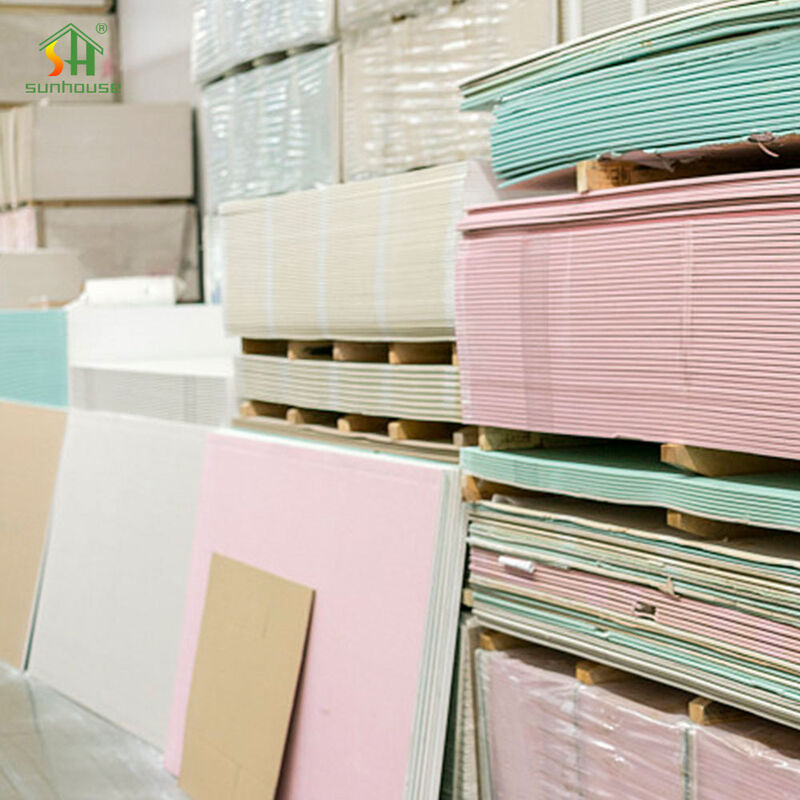
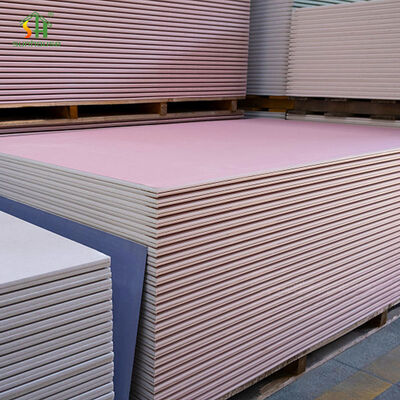
Product Positioning
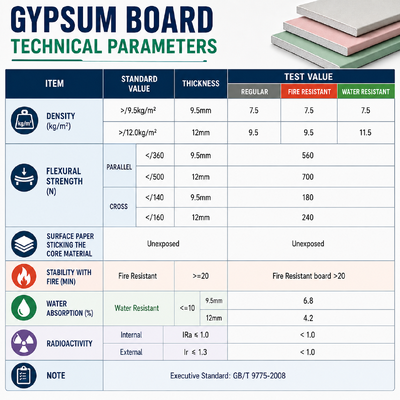
This product concept is positioned for commercial contractors who need documented combined performance. It is a quotation-ready starting point, not a substitute for the approved technical data sheet. The offered board type, dimensions, edge, applicable standard and supporting reports must be confirmed for each order. Where a fire, acoustic or other assembly rating is required, approval applies to the complete construction, not the gypsum panel in isolation.
Key Features
• Paper-faced gypsum panel format for interior dry construction, subject to the confirmed board type.
• Project-led selection of thickness, width, length and edge profile.
• Options may include regular, moisture-resistant, fire-resistant or combined-performance configurations where documented and available.
• Compatible with coordinated ceiling or partition procurement when the framing, accessories and finishing method are separately specified.
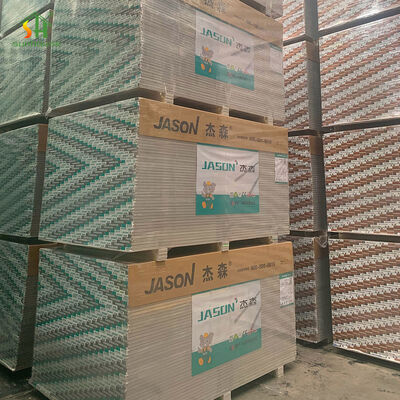
• Export packaging can be planned around pallet protection, container loading, route and unloading limitations.
Core Advantages
The main commercial advantage is specification clarity. Buyers can compare like with like when the quotation identifies a product code, actual size, edge, application and evidence package. The modular approach also supports room-by-room schedules: a distributor can stock general-purpose boards while project-specific products remain controlled against approved requirements. No performance value should be added to the page unless it appears in a traceable source for the exact offered item.
Specifications
Technical Characteristics
Gypsum contains chemically combined water and is widely used in interior lining systems. That material characteristic does not establish a wall's fire-resistance period. Similarly, a moisture-resistant formulation does not make a lining universally suitable for continuous water exposure. Technical selection must distinguish board-level properties from system-level results and must preserve the exact installation details covered by the approved design.
Dimensional language also needs care. “4 × 8 ft,” 1220 × 2440 mm and 1200 × 2400 mm can appear in the same market but are not identical. Specify the actual required size and tolerance. Thickness names may also be nominal; the purchase order and inspection plan should use one agreed unit system.
Configuration Note for This Product
Combined claims require evidence for the same product—not one report for a fire board and another for a different moisture board. Match product code, thickness, plant and declared standard across the document set.
Applications
Suitable applications may include interior partitions, wall linings and ceiling systems within the exposure and performance limits of the confirmed product. For a real project, classify each room as dry, intermittently humid, directly wet, high traffic or regulated by an assembly requirement. Use that schedule to select products rather than extending one board across incompatible conditions.
A practical example is a distributor serving apartment fit-out contractors. Regular board can address approved dry-room work, while humidity-prone areas and rated assemblies receive separately identified products and evidence packs. This is a planning example; it is not a claim about a completed customer project.
Installation Guidance
1. Store boards flat, dry and fully supported; protect edges and corners.
2. Confirm framing gauge, alignment and spacing against the approved system.
3. Follow the specified board orientation, layer arrangement and joint staggering.
4. Use the required fastener type, length and spacing without tearing the facing.
5. Treat joints and perimeters with the approved tape, compound and movement details.
6. Coordinate openings, services and penetrations before closing the lining.
7. Do not install visibly wet, damaged or distorted boards until assessed.
8. Follow local safety requirements and the current manufacturer instructions.
Procurement Advice
Send application, drawings, board type, actual dimensions, edge, quantity, destination, Incoterm, required standard, document list and target delivery date. Ask for a packing schedule and container-loading proposal. Before mass production, approve the data sheet, label artwork and—where useful—a physical sample. For regulated projects, require traceability between the offered product, report and delivered batch.
The purchase contract should state how shortages, breakage and nonconforming dimensions will be handled. Buyers should also decide whether spare quantity is needed for cutting and transit risk based on their own layout and route; this page does not invent a universal waste percentage.
FAQ
Is this board available in every listed dimension?
Not necessarily. The table describes common knowledge-base options. Confirm the exact type-size-edge combination in the current quotation.
Can board color prove moisture or fire performance?
No. Color is not sufficient evidence. Use the product code, technical data sheet and relevant test or declaration.
Does the board alone provide a rated wall?
No. Fire and acoustic performance generally belongs to a complete tested or engineered assembly.
What information is needed for a firm quotation?
Provide the application, dimensions, edge, quantity, destination, standard, documentation, packing and commercial terms.
Can specifications be customized?
Some dimensions, facing or packing may be discussed, but feasibility, minimum quantity, evidence and lead time must be confirmed in writing.


